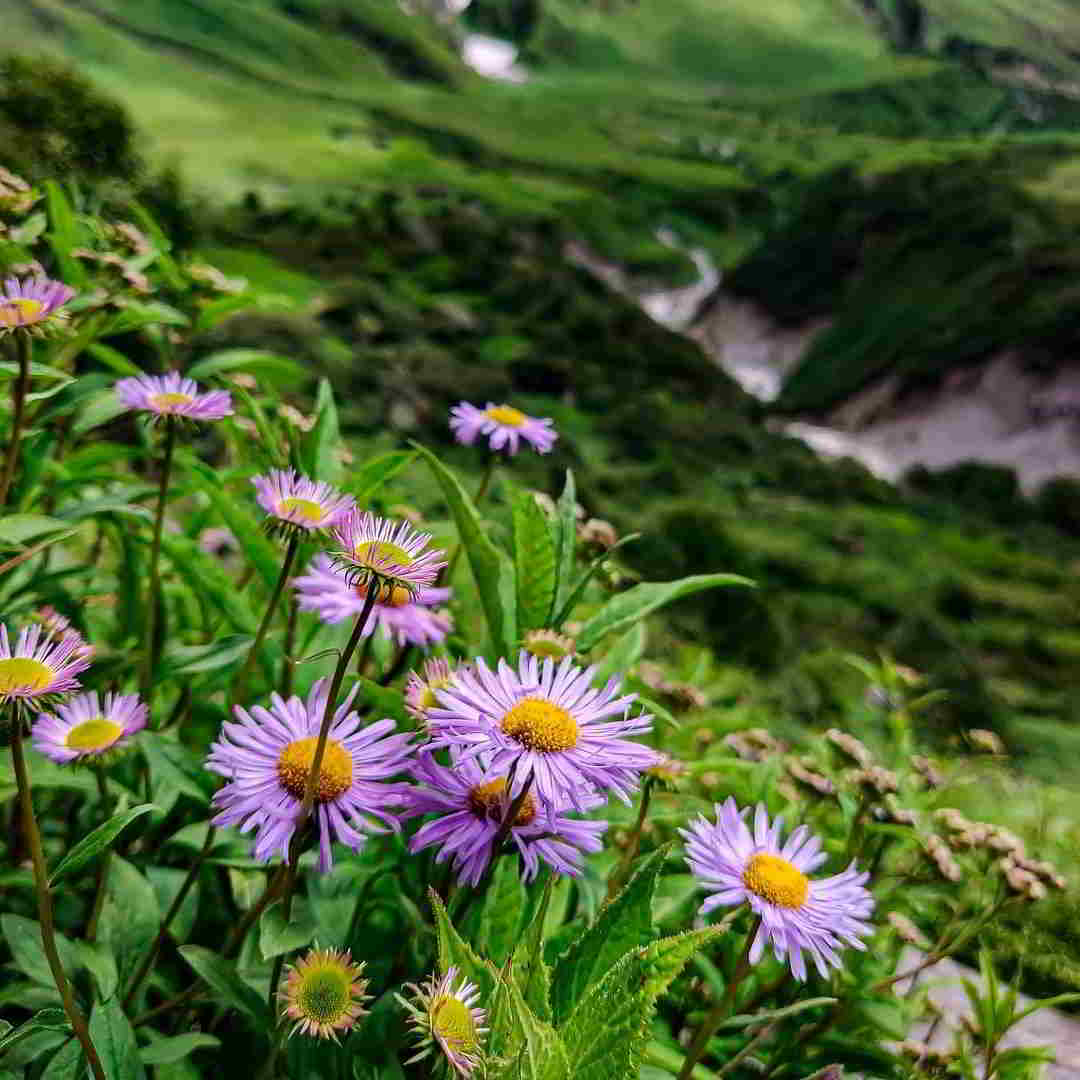
The Valley of Flowers, is an Indian National Park and a UNESCO World Heritage Site. Tucked away neatly in the Bhyundar Valley of Chamoli District lies of exotic and various species of alpine flowers, vegetation and medicinal plants, rare animals and birds that we don’t usually get to see. It is a part of the famous Nanda Devi Biosphere Reserve. The best time to visit the valley is between July to September. This is when one can see the maximum variety of fully bloomed flowers and their gorgeous colours. It is said that the colour of the valley changes with each season according to the colours of the flowers.
Every year many people from various parts of the world come to visit the valley in full bloom. The rich diversity and the beauty of the place makes it extremely popular amongst trekkers. The Valley of Flowers trek starts from Ghangaria base camp and the trek route to the Valley is a mix of steep climbs and gradual slopes making it easy to moderately difficult. And because of this, a number of beginners and first-time trekkers feel confident of undertaking the trek. The Valley of Flowers in Uttarakhand is also near Hemkund Sahib which allows trekkers to include this point in their itinerary as well. The Hemkund Sahib is the world’s highest Gurudwara and the frozen blue-green Hemkund Lake is another jewel of nature.
Valley of Flowers Trek Itinerary
Day 1 – Haridwar to Joshimath
After you board off at Haridwar Railway Station, enjoy a hearty breakfast and get ready for the long scenic drive to Joshimath which takes about 10 hours. En-route you will cross many confluence points of some famous river bodies. Particularly of note is the Devprayag, which is the meeting point of Rivers Alaknanda, Bhagirathi, and the mythical underground Saraswati. These rivers merge at Devprayag to form the River Ganga. Enjoy the beautiful roads that bend around the mountains passing through quaint hamlets and villages to reach Joshimath at an altitude of 6,150 feet. Enjoy a satisfying meal at the end of the day and tuck in your beds for the night.
Day 2 – Joshimath to Govindghat – Govindghat to Ghangaria
The second day of the trek starts with a scrumptious breakfast followed by a 22 kms drive to Govindghat, which is a popular pilgrimage site for the Sikhs. Govindghat is at an altitude of 5,997 feet is also the beginning point of the famous Badrinathji Yatra trek. This is also where you will begin your journey of the Hemkund Sahib Trek and to the Valley of Flowers and is the last motorable point of this trek. After reaching Govindghat, you will trek for a distance of 14 kms to Ghangaria which is the site of the base camp for the upcoming treks. You can call it a day upon reaching your accommodation at Ghangaria.
Day 3 – Ghangaria to Valley of Flowers and back
settle your mind and carefully look at the flowers. If Mother Nature was a painter, the Valley of Flowers is her masterpiece!
The diversity of indigenous flora and fauna thrives in this beautiful meadow. The Nanda Devi National Park, with its rugged wilderness provides a magnificent background to the myriad hues radiating from the valley. You can easily spot different flowers like Geraniums, Himalayan Rose, Blue Poppy, and various other species in vibrant shades of blue, red, yellow, and pink.This is the most important day of the entire tour because this is the day we begin the journey of the world famous Valley of Flowers trek from Ghangaria. Sitting at an altitude of 14,400 feet, the flowers of the valley in full bloom is a visual treat. It takes several long moments to
The trek from Ghangaria to Valley of Flowers takes about 4-5 hours on one side covering a distance of 5 kms. After basking in the sunlight in nature’s lap and enjoying many peaceful moments, we trek back to Ghangaria and bring the day to end.
Day 4 – Trek from Ghangaria to Hemkund Sahib
The Hemkund Sahib trek is one of the most adventurous and popular treks. The entire trek distance from Ghangaria to Hemkund Sahib and back is 10 kms that is covered in 9-10 hours. After hiking a steep uphill of 5 kms we will reach the Gurudwara Hemkund Sahib and Hemkund Lake. This is the highest located Gurudwara in the world standing at an altitude of 15,200 feet from sea level. The glacial Hemkund Lake is surrounded by seven perpetually snow-capped peaks. Overnight stay here is not possible, so we trek back to Ghangaria before evening sunset .
Day 5 – Ghangaria to Govindghat and Govindghat to Joshimath
On the second last day of the trek we again trek back from Ghangaria to Govindghat via the same beautiful roads that we took on the second day. From Govindghat it’s a drive of 22 kms back to Joshimath where you stay at your given hotels/lodges for the night.
Day 6 – Joshimath to Haridwar Railway Station
This day marks the end of the Hemkund Sahib Valley of Flowers trek. After having breakfast, you are driven back to Haridwar Railway Station by evening. This is where we depart with some beautiful memories collected along the way and hope to see each other again.
FAQs
Where is the Valley of Flowers located in India?
The Valley of Flowers National Park is located in the state of Uttarakhand in North Chamoli and Pithoragarh. It is protected by UNESCO and enjoys the status of a World Heritage Site.
Why is the Valley of Flowers famous?
The Valley of Flowers, Uttarakhand, is a national park resting in the interior Garhwal Himalayas that is known for its diverse abundance of flora and fauna. It is home to rare endangered animals like the Snow Leopard, Asiatic Black Bear, Blue Sheep, and more. It also houses many cherished flowers like the Blue Poppy and Cobra Lily and also many varieties of orchids, geraniums, primulas, marigold, and daisies. One can also see birch and rhododendron trees in the sub-alpines of the valley. This picturesque vibrant meadow attracts visitors from every corner of the world.
How many flowers are in the Valley of Flowers?
The Valley of Flowers nurtures close to 550 species of endemic flowers and medicinal plants species like pteridophytes, angiosperms, and gymnosperms that are a specialty of high altitude vegetation. 500 species out of these 550 are exclusively flowering plants.
What is the best time to visit Valley of Flowers?
The best time for the Valley of Flowers Trek is undoubtedly during the monsoon months of July to September. August is popularly considered to be the best month to visit this enchanting meadow.
How is the weather in Valley of Flowers?
Most people undertake this trek in the monsoon months of July or August, so sudden rainfall can be expected. The average temperature varies from 16 to 18 degree Celsius. The mist and low hanging clouds over the horizon and the lush rain-washed flowers creates an unbelievable magical beauty.
Can we visit Hemkund Sahib during this Trek?
Absolutely. The Hemkund Sahib Valley of Flowers is the favourite trek route of trekkers journeying to the Valley of Flowers. It is a must-visit destination for all. This trek is taken on the 4th day of the itinerary. The Gurudwara Hemkund Sahib is one of the most revered and beloved Sikh Shrines.
How to reach the Valley of Flowers from Delhi?
From Delhi you can easily board a direct bus or train to Haridwar. Alternatively, you can take a flight to Dehradun and drive to Haridwar from there. From Haridwar you need to again drive to Govindghat and a further 4 kms to Pulna in a separate vehicle. From Pulna you’ll need to trek about 9 to 10 kms to reach the Valley of Flowers.
How far is the Valley of Flowers from Auli?
Auli to Valley of flowers distance is 49 kms . The Valley of Flowers is not directly connected by roads, so you have to reach Govindghat at first which is at a distance of 31kms from Auli and takes about an hour. Trek to the Valley of Flowers from Govindghat campsite for 28kms. It is ideally covered in 2 days.
How difficult is Valley of Flowers Trek?
The Valley of Flowers trek is a relatively easy to moderate one. There’s some steep
ascent when beginning from Ghangaria which gradually becomes easy till you reach the Valley of Flowers. It takes around 5 days to finish the trek from Haridwar.
Is Valley Of Flowers a good trek for a first timer?
Absolutely! The route is such that it can be easily trekked by a first-timer with basic fitness levels. Although there’s an uphill climb for the first 3 km you can easily trek through those trails. Ponies and helicopters can also be availed. Ensure a minimum fitness level before embarking on the trek.
How long is Valley of Flowers Trek?
It is a four day long journey beginning at Govindghat base, followed by a 14kms trek to Ghangaria within 8-10hrs. From Ghangaria campsite it’s a 10kms trek back and forth to the Valley of Flowers
What level of fitness is required for Valley Of Flowers trek?
Although the Valley of Flowers trek is touted to be easy to moderate, it’s best to prepare yourself in advance. Focus on cardio exercises for at least 1 hour/day and practice climbing stairs. Add some breathing exercises to help regulate your breathing while trekking at high altitudes. Also focus on strengthening your leg muscles.
Can I have liquor or smoke during the trek?
Consumption of alcohol or other types of intoxicants during the Valley of Flowers trek is
strictly prohibited as alcohol can be dangerous at high altitudes.
What sort of shoes should be worn for the Valley of Flower Trek?
Being a strictly Himalayan trek, you should absolutely wear waterproof trekking shoes only and not sports or normal walking shoes on the Valley of Flowers, Uttarakhand, trek. Make sure your shoes are waterproof and have a high ankle and grip. Do carry a minimum of 4 pairs of cotton socks.
Is there mobile connectivity on the Valley of Flowers trek?
Mobile reception will be available till Haridwar, and at times till Joshimath but not beyond that. So you’ll get the much needed digital detox and be able to enjoy the ethereal beauty of the valley whole-heartedly.